
Your Marketing Team is Wrong About AI Visibility
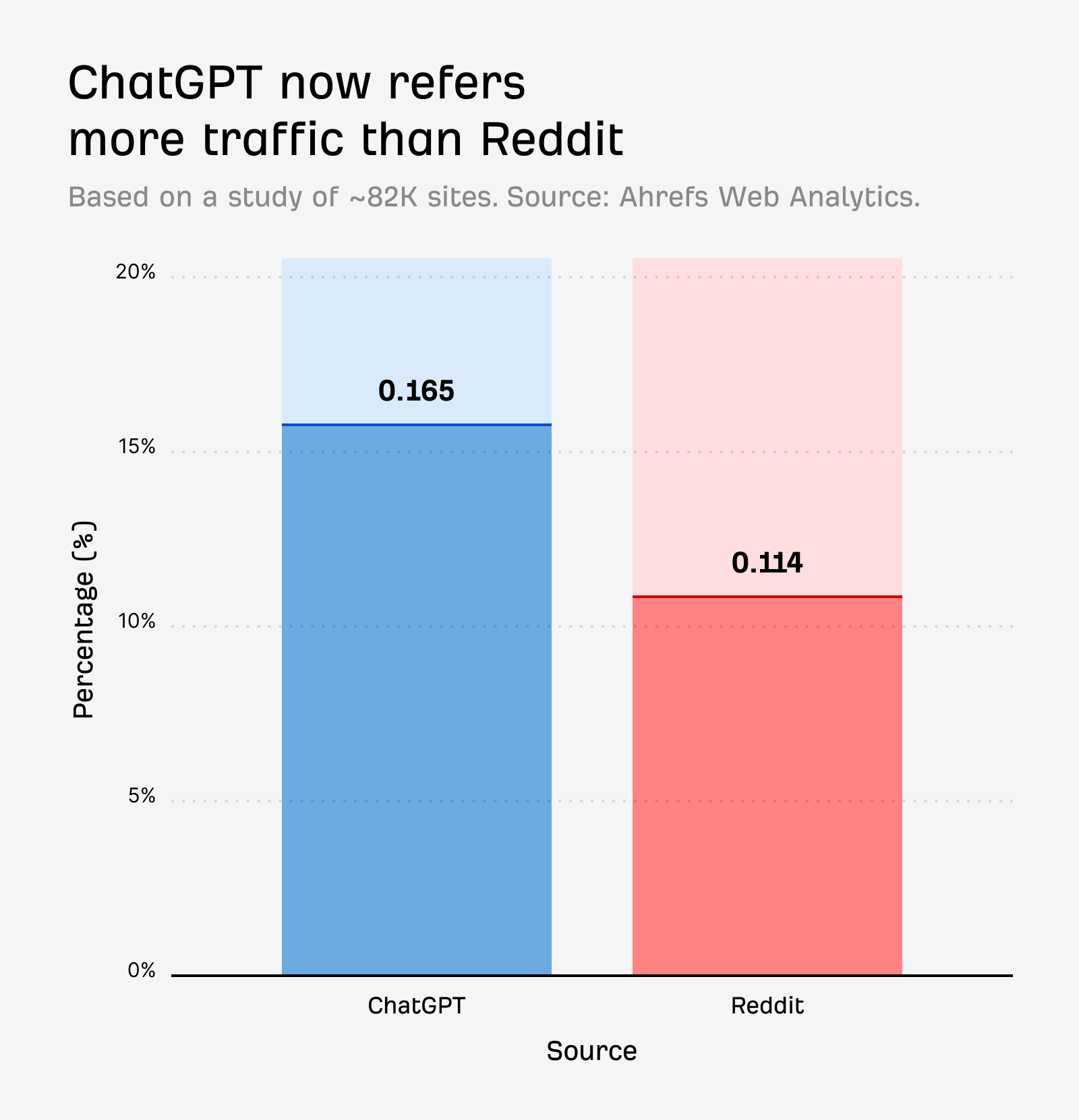
I’m seeing a pretty big gap in how businesses think Answer Engine Optimisation and Generative Engine Optimisation (how to get AI to reference you) works and how it actually works. If you own a business and have anything to do with marketing I’d probably read this because whether you like it or not, over the next 5 years AI traffic may make or break your business. I promise minimal technical talk and jargon.
How Mainstream LLMs Access Data
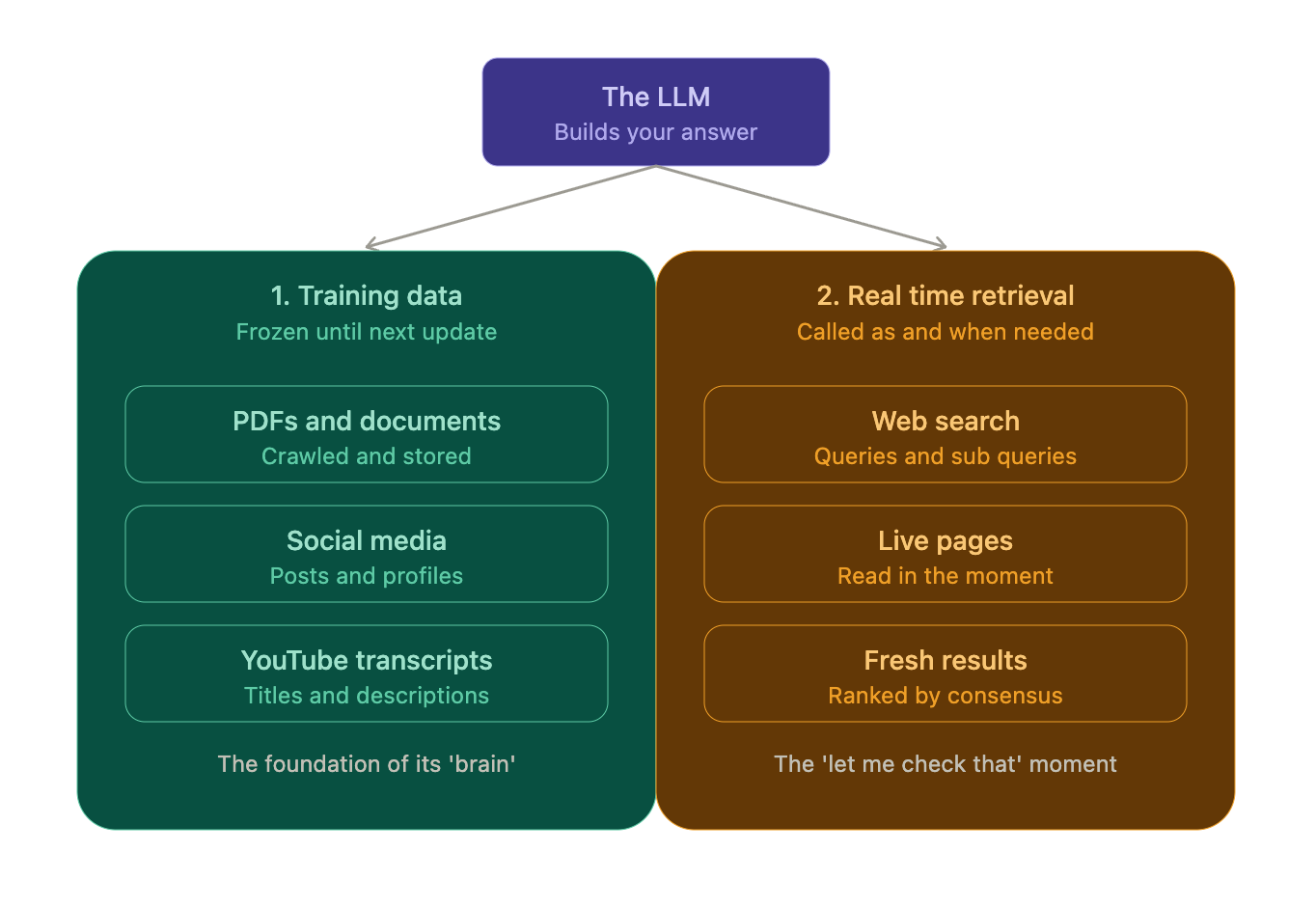
Generally LLMs access data through two avenues: training data (PDFs, social media, YouTube transcripts etc) and real time retrieval (web search, live pages, fresh results).
What’s Training Data?
This is a batch of information the LLM is trained on. This is the foundation of its ‘brain’, which is then frozen until the next update. Training data is updated every few months, but real time search retrieval is called on as and when needed, if the user’s question is too specific to use the training data etc.
How Does Real Time Search Retrieval Work?
As previously mentioned real time search retrieval is used when data published after the training data was updated and is specifically asked for, or when the query posted by the user is too specific to generalise. You’ll see this on Claude or ChatGPT where it says something like ‘let me check that’. It then searches using an API (fancy word for a connection to another program, in many cases it’ll be Bing or Google). What it’s actually doing is sending off a load of queries and subqueries to build an answer. The results from all sub queries are combined and ranked and you end up with a probabilistic response based on consensus (how many sites are saying the same thing), freshness and authority.
So where traditional searches on Google, Bing, Opera, DuckDuckGo usually started with a single query calling a list of results, LLMs send multiple queries (a main query with sub queries) to find results. This is called query fan out. Depending on the temperature the LLM is tuned to (temperature is a numerical hyperparameter that dictates how predictable or creative your LLM will behave, think a low temperature for predictable coding outputs and a high temperature for creative work; in short, if training data is the library, temperature is the glasses you hand the LLM to interpret the books), the LLM can spit out a pretty predictable answer every time, a pretty balanced answer with a bit of variation, or total randomness.
Examples of AI Queries in Action
SO, I ask AI ‘Who was Theodore Roosevelt?’ The AI references its training data and says ‘Theodore Roosevelt was the 26th president of the United States’. I say ‘what are the best ergonomic flip flops I can buy in the UK, on June 22nd 2026’ and it does the spinny animation and behind the scenes searches ‘best flip flops’, ‘best flip flop reviews’, ‘teva flip flops’, ‘teva reviews’, ‘reddit teva reviews’, ‘keen flip flops’, ‘keen flip flop reviews’, ‘YouTube keen flip flop videos (transcriptions)’, ‘flip flop finder keen reviews’ etc etc and weighs the answers to give an answer based on the temperature. So like I said, one question to AI equals multiple queries and sub queries.
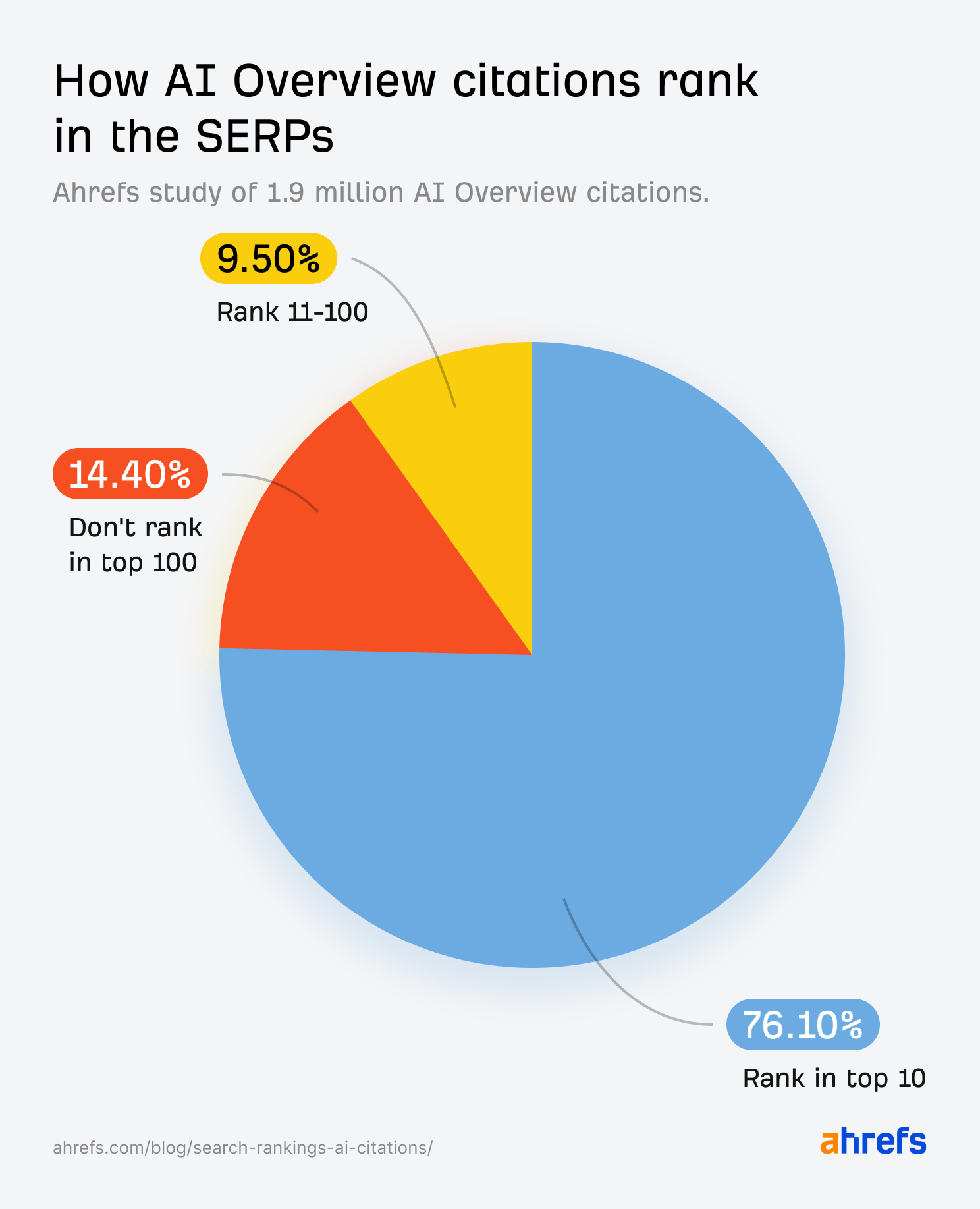
Now, here’s where it gets interesting. Back in July 2025, Ahrefs studied 1.9 million AI Overview citations and found 76% came from pages ranking in Google’s top 10. Their updated study (March 2026, 863,000 keywords and 4 million AI Overview URLs) found that number had dropped to 38%, with the rest split almost evenly between positions 11-100 (around 31%) and beyond the top 100 (around 31%). Part of that drop is Ahrefs improving how they detect citations, and part is Google leaning harder on those fan out sub-query results rather than the direct SERP. The takeaway is the same either way: ranking still matters a lot, but covering a topic properly across related queries now matters just as much. So please shut up about SEO being dead. It’s not dead, if anything it’s more important than ever to get your foot in the door with these systems, you just need to think wider than a single keyword.
How AI Sees Your Business
Next, AI sees your data as one of the following:
- Citable - it’ll share your link during explanation
- Visible but non citable - it’ll mention your product/service/website but provide no link (this is the equivalent of a word of mouth referral)
- Invisible - AI doesn’t know your business exists
I won’t go into technicals on this but using proper markdown files and following defensive SEO basics will generally help keep you visible.
The next article will go further into the sources and avenues you need to cover to get on the radar and cited by LLMs.
Need help getting AI to see your business? Get in touch and let’s talk.